
How Norwalk Residents Come Into Focus
Norwalk has no single master roll of every person who lives in the city. An assessor record links a tax parcel to an owner. A voter lookup answers a narrower registration question. The Town Clerk index connects names to deeds, liens, mortgages, maps, and judgments. The library adds dated city directories, newspapers, maps, and yearbooks. Each source has a keeper and a different idea of what a name means.
Start with the strongest clue, then carry its stable detail into the next source. An address can lead to a parcel ID, the parcel ID to an assessment card, and the card to a deed book and page. A dated directory entry can point to a street, while a court result can supply a docket number. The official trail can miss unlisted household members, protected addresses, and people who never appear in that record family.
The first pass is short and ordered:
- Run the address through My Norwalk for property, school, voting, and council-district context.
- Carry the parcel or PID to the current ACT DataScout Norwalk search and keep the situs and mailing fields separate.
- Use the Norwalk land-record index for party names, instrument types, and book/page leads.
- Test the state voter lookup, court inquiry, or probate district when the question concerns status, a case, or an estate.
- Move to the library, the custodian counter, a form, or a written request when the online surface is blocked or too thin.
That sequence is more reliable than treating a search snippet, a map pin, or one same-name hit as a finished answer.
Norwalk Resident Records Offices
Norwalk is the right first jurisdiction for a Norwalk address. Connecticut has no current county government or county recorder, so Fairfield County is a geographic and historical label rather than a local filing desk. The Town Clerk, Assessor, Registrar of Voters, library, GIS office, court clerk, and state agencies each hold a different slice of the resident trail.
Norwalk Town Clerk
125 East Avenue, Room 102
Norwalk, CT 06851-5125
203-854-7747
Norwalk Registrar
Municipal voter registration office
Norwalk, Connecticut
203-854-7996
Norwalk Public Library
History Room, Main Library
1 Belden Avenue, Norwalk
203-899-2780
The Town Clerk is open to public inspection Monday through Friday from 8:30 a.m. to 4:00 p.m. The Assessor offers public-access terminals and tax maps. Library staff can take research requests by phone, email, mail, or form. Those in-person and request routes matter when an index is not a full image or a current portal changes.
Read the Connecticut municipal structure explanation before labeling a result “county” material. A regional lead can point toward Norwalk, but the municipal custodian remains the source to verify it.
Note: Fairfield County remains useful for historical and search context, but Norwalk records do not pass through a current county recorder.
One visual reference from the official Norwalk Town Clerk page helps place the local custodian in the larger records path.
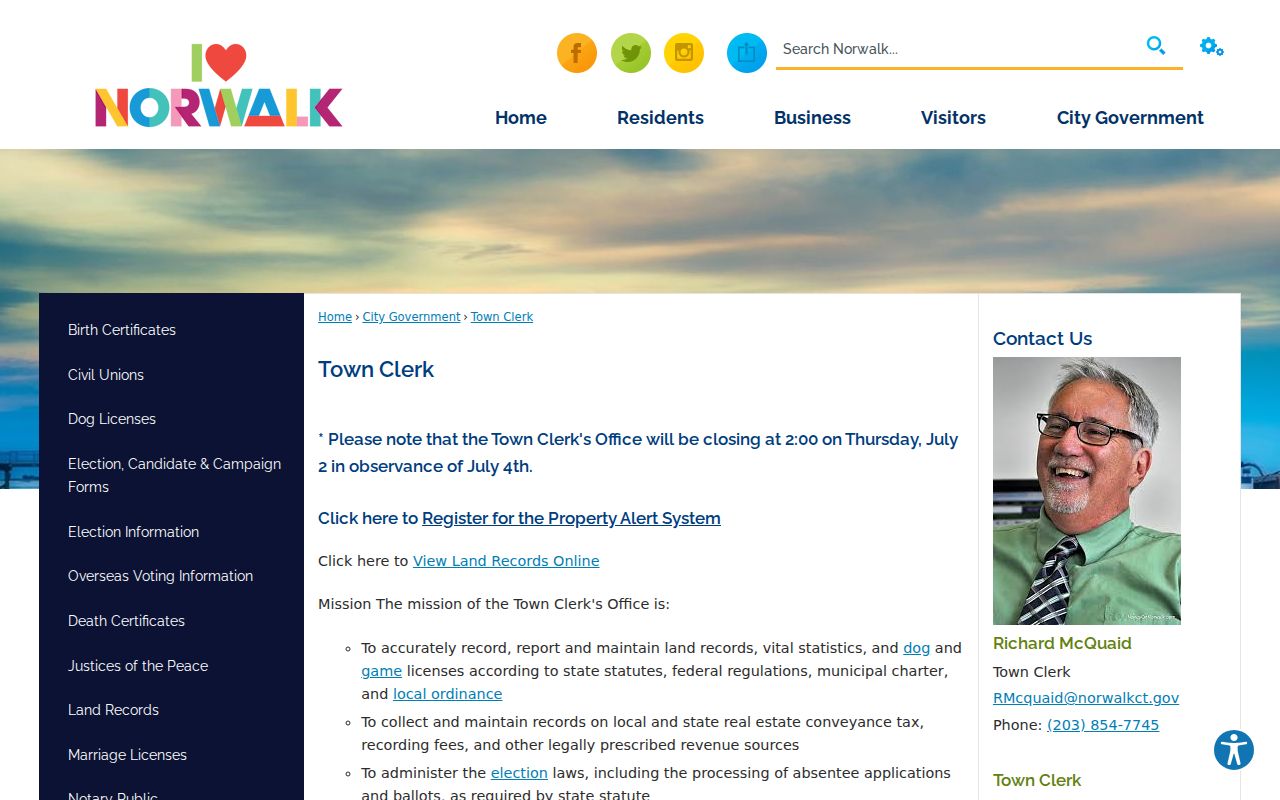
The Town Clerk connects the city’s land, vital, license, and election services, but each record family still has its own access rule.
Norwalk’s Municipal-First Records Map
Norwalk’s records map is shaped by the state’s municipal structure. Land instruments, parcel references, and many local certificates begin at City Hall. State systems fill gaps for voter data, credentials, business filings, vital-record forms, and correctional status. The Stamford-Norwalk Judicial District handles court questions, while Probate District 51 uses the Norwalk-Wilton label rather than “Fairfield County probate.”
That split changes the search order. A land question belongs with the Town Clerk, Assessor, GIS, or permit office. A court question belongs in the Judicial Branch inquiry and then with the clerk for an official file. An estate lead belongs in PD51, with the date range kept in view. A historical name may need the History Room, State Library, Museum, or Archives before a current municipal system can make sense of it.
Norwalk’s official history also gives old locality words useful search terms. “South Norwalk” and “East Norwalk” can describe a former civic identity, a post-consolidation neighborhood, or a newspaper’s style. The 1913 consolidation joined Norwalk, South Norwalk, and East Norwalk, so the label printed in an older record may not match the current city field.
The state government overview supports this distinction. It keeps a county label from sending a land search to the wrong office.
Here is a captured view of that municipal and state context from the official source.
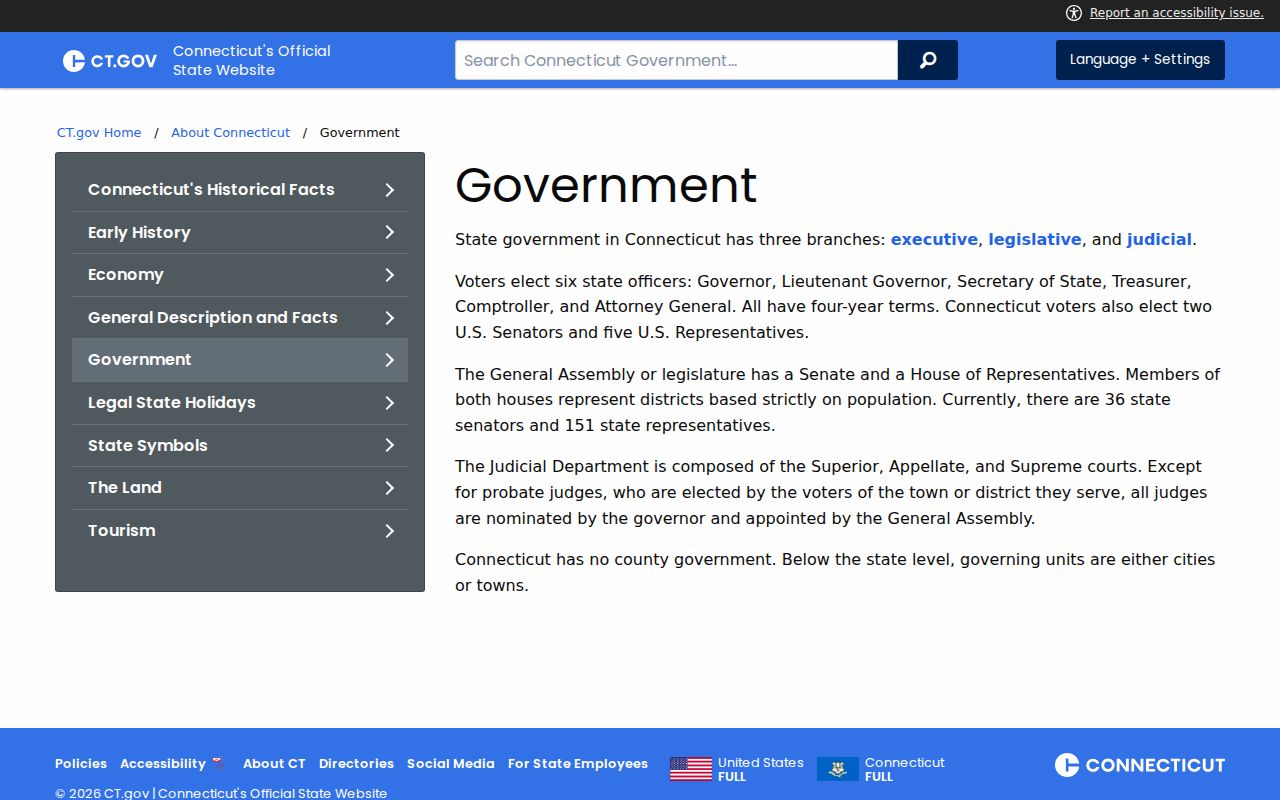
Use the geography name exactly as the source gives it, then bring the result back to the Norwalk office that can verify the record.
From My Norwalk to a Norwalk Parcel
An address search works best as a handoff chain. My Norwalk accepts Street Number, Alt#, and Street Name, then returns property information, school and voting districts, and council-district context. That output is a starting point, not a title report. Carry the parcel or address into GIS for location and into DataScout for the assessment card.
ACT DataScout became the current Norwalk assessment route after the city announced the Vision/VGSI transition in December 2025. Vision redirects were described as effective January 16, 2026. The help material documents owner-name, parcel, property ID, address, subdivision, section-township-range, transfer, mailing-address, and property-type paths. The live Norwalk form returned a 403 during unattended inspection, so its exact current filters and result controls should not be guessed.
DataScout’s documented search fields make the next handoff clear:
| Field or mode | What it can connect | Care point |
|---|---|---|
| Owner first and last name | Assessment owner or business form | Keep role and spelling as shown |
| Parcel number or property ID | Parcel, card, map, and tax references | Local punctuation rules can differ |
| Street number, direction, street name | Situs search and parcel handoff | Street type is not included in the help description |
| Transfer and mailing-address options | Deed leads and owner correspondence fields | Not proof of occupancy or title |
| View and Map results | Card details and parcel location | Confirm against the custodian |
My Norwalk is useful for the first address clue. DataScout is useful for the parcel bridge. A Town Clerk instrument, a survey, or a certified record is the step that can support a legal conclusion.
One captured My Norwalk view shows the kind of address context that starts the chain.
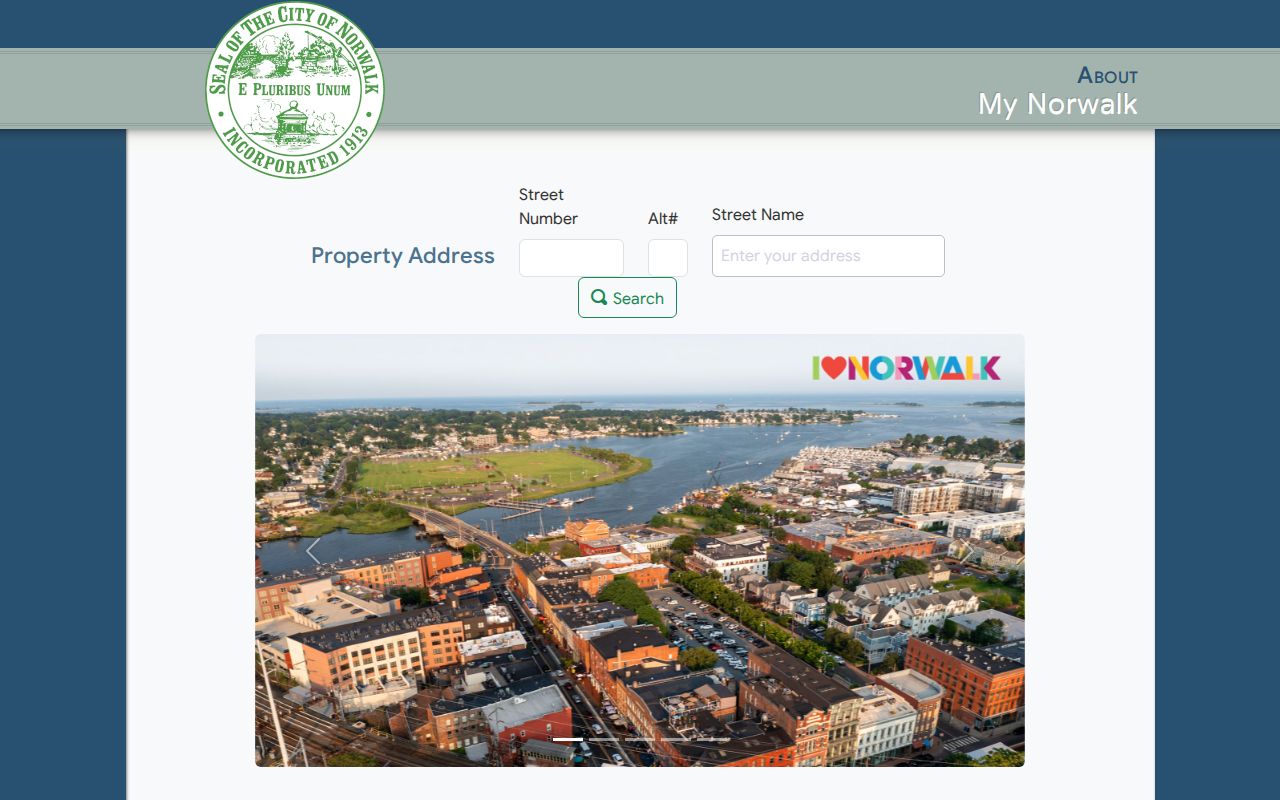
Its school, voting, council, and property outputs should stay labeled as convenience results, not as a complete resident roll.
The current assessment route is shown in the linked Norwalk DataScout search.
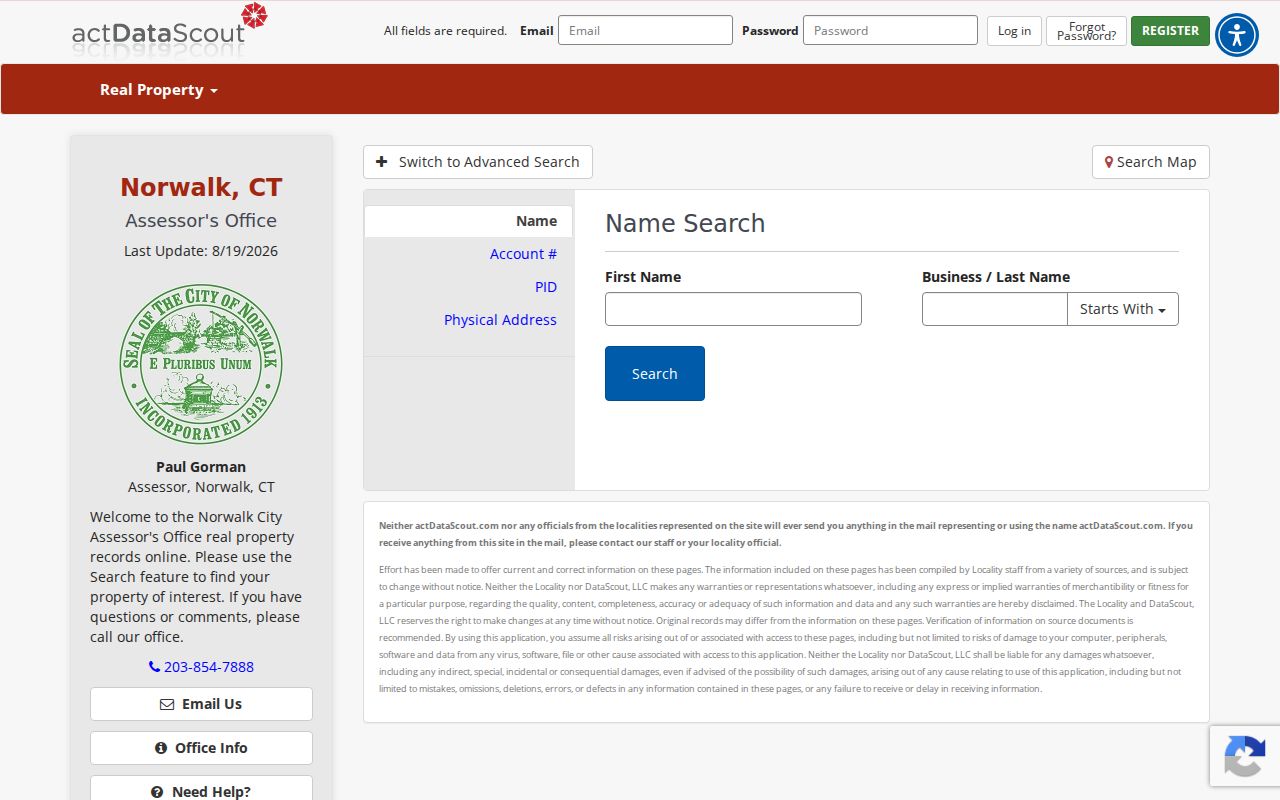
Use the card to capture the PID, situs, owner role, map, value date, and deed reference before moving to the Town Clerk.
What the Norwalk Town Clerk Records Index Shows
The Norwalk Town Clerk land-record page names deeds, conveyances, mortgages, assignments, liens, tax liens, judgments, attachments, maps, and other instruments affecting an interest in land. Connecticut General Statutes Section 7-25 describes alphabetical grantor and grantee entries, cross-indexing, the nature of the instrument, date received, and book/page or another locating mark. Section 7-25a supports public electronic indexing.
For a resident trail, the index is a party-and-document lead. Search the current owner as grantee, the prior owner as grantor, and spelling variants separately. If a field card supplies Book 705, Page 165, use that reference to request the underlying instrument. Record the recording date, execution date, transfer date, named role, and later release or assignment as different facts.
The online index is a convenience surface. Public inspection is available at the Town Clerk during normal hours, and the underlying deed, map, or certified copy is the stronger source. The office lists $1 per page for copies and $1 per page plus $2 certification for a certified document; recording fees and map charges are separate and should be checked on the current page before payment.
A search result can be correct and still answer a narrower question than the reader expects. A deed party is not automatically a current occupant. A lien is not a present owner. A map reference is not a transfer. Keep the instrument type beside every name.
Current Norwalk Resident Records and Directories
Norwalk’s current resident-directory sources are best read as separate rolls. Ownership, registration, parcel context, and local association geography overlap, but none is a complete list of everyone at an address. The table keeps the keeper and the access limit visible.
| Source | What it can show | Keeper | Access |
|---|---|---|---|
| ACT DataScout field card | Owner, situs, PID, map, values, transfer lead | Norwalk Assessor | Online route and public terminals |
| Public voter lookup | Name, address, current residence, active status, party choice | Secretary of the State and Registrar | Narrow public lookup; exact live fields not verified |
| Town Clerk land index | Deed parties, liens, mortgages, maps, judgments | Norwalk Town Clerk | Online index, counter, and copy request |
| My Norwalk address tool | Property, school, voting, and council context | City of Norwalk | Online convenience route |
| Neighborhood map | Association boundaries and parcels outside associations | Norwalk planning/GIS | Map context, not a household roster |
The resident-directory question decides which row to use. An owner question starts with the Assessor and Town Clerk. A registration question starts with the Registrar and state lookup. A block question starts with GIS and separate parcel cards. A dated family-history question may skip current rolls and begin in the library.
When the task narrows to one person, preserve the source role and date before comparing results. A page showing a person in a directory, court result, or credential record does not turn all three into one identity without a second identifier.
Norwalk Court Records Have Different Purposes
The Connecticut Judicial Branch inquiry offers separate party, docket, property-address, legal-notice, and related search surfaces. A party search requires a last name and can add first name, location, case category, case type, sort order, and Starts With, Contains, Is Equal To, or Sounds Like matching. A docket search uses location, category, year, number, and suffix, with optional party and document scope.
The property-address surface is different again. City or Town is required, partial matching needs at least three characters, and Street Address, ZIP, Property Type, and Case Status are additional controls. Its stated coverage includes foreclosure cases after January 1, 2014 and Norwalk session material after March 1, 2016. Selected records are removed after statutory periods. The portal is a public lookup, not the official court file.
Use a hit as a lead, then compare role, location, dates, docket, and the clerk’s record. The result may show a party but not the full pleading, a disposition, or a protected matter. The Stamford-Norwalk public-information and clerk reference is at 17 Belden Avenue in Norwalk, with 203-965-5308 listed for verification.
The lookup surface itself is useful evidence of the fields a name search can test.
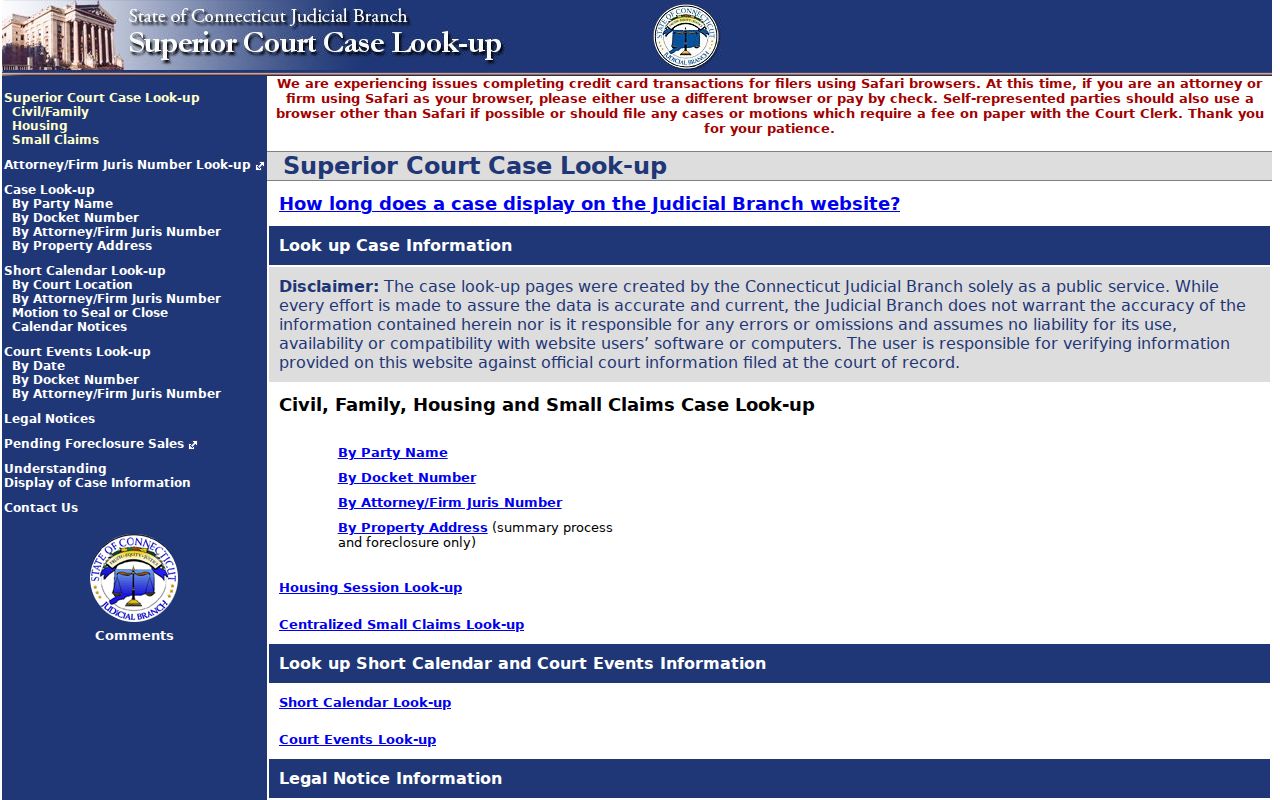
Keep the search date and the portal’s disclaimer with the result, especially when a no-hit may reflect a display window or sealed record.
- Docket: the stable case key that organizes parties, filings, events, and disposition.
- Index: a finding aid that points toward a record, not necessarily the record image.
- Certified copy: a custodian-issued copy with the certification needed for a formal use.
- Disposition: the recorded outcome or status of a case, which a party hit alone does not establish.
Norwalk Vital Records Cross a 100-Year Line
Birth, death, and marriage records have different access rules. Connecticut birth records under 100 years are restricted under CGS Section 7-51, with eligible requesters and identity or relationship proof. Birth records from 2003 forward can be requested from any Connecticut town or the state office, while older events follow town, mother’s-residence, or state routes subject to eligibility.
Adult access to certified death records is broader, but Social Security numbers are restricted and usually redacted. Norwalk’s death form asks for the decedent, event, family, requester, relationship, copy type, and SSN-access proof where applicable. The local fee is $20 per copy, payable by check or money order to the Norwalk Town Clerk, with the local mailing route at 125 East Avenue, Room 102. Marriage copies generally use the town of ceremony, a party’s town of residence, or the State Office; Norwalk lists a $20 certified copy and a $50 license application fee.
Use the Connecticut DPH forms and the local Town Clerk route before paying. VitalChek is the only approved third-party online or phone route named in the research, and its vendor charges are additional. A library transcription or index can supply a date lead, but it is not a certified certificate.
The under-100-year rule is a boundary in access, not a statement that an event did not happen. Record “not publicly returned” when that is the supported result.
Norwalk Resident Voter Records and Protected Addresses
Norwalk’s Am I Registered? instructions describe a public lookup by name, address, current residential address, active status, and party choice or unaffiliated status. The state lookup returned a Request Rejected response during unattended inspection, so exact current controls, result cards, and no-match messages remain a research gap. A failed form is not proof of no registration.
Connecticut’s centralized system includes voter application data, election participation and history, in-person or absentee participation, and town updates within 60 days. A specialized statewide file request costs $300 and requires the requester, mailing details, and a permitted election-related, scholarly, journalistic, political, or governmental purpose. Current public data releases the year of birth rather than month and day under Public Act 26-1 Section 96.
Norwalk’s Registrar is the correction and district fallback. Election Day registration instructions, including City Hall hours on Election Day and current proof of Norwalk residency, belong with that office. A protected result should remain protected. The Connecticut Address Confidentiality Program can substitute a mailing address for a qualifying participant, and voter privacy under CGS Section 9-50(d) can shield street and house information.
Two official views show why the public surface must be read with its limits.
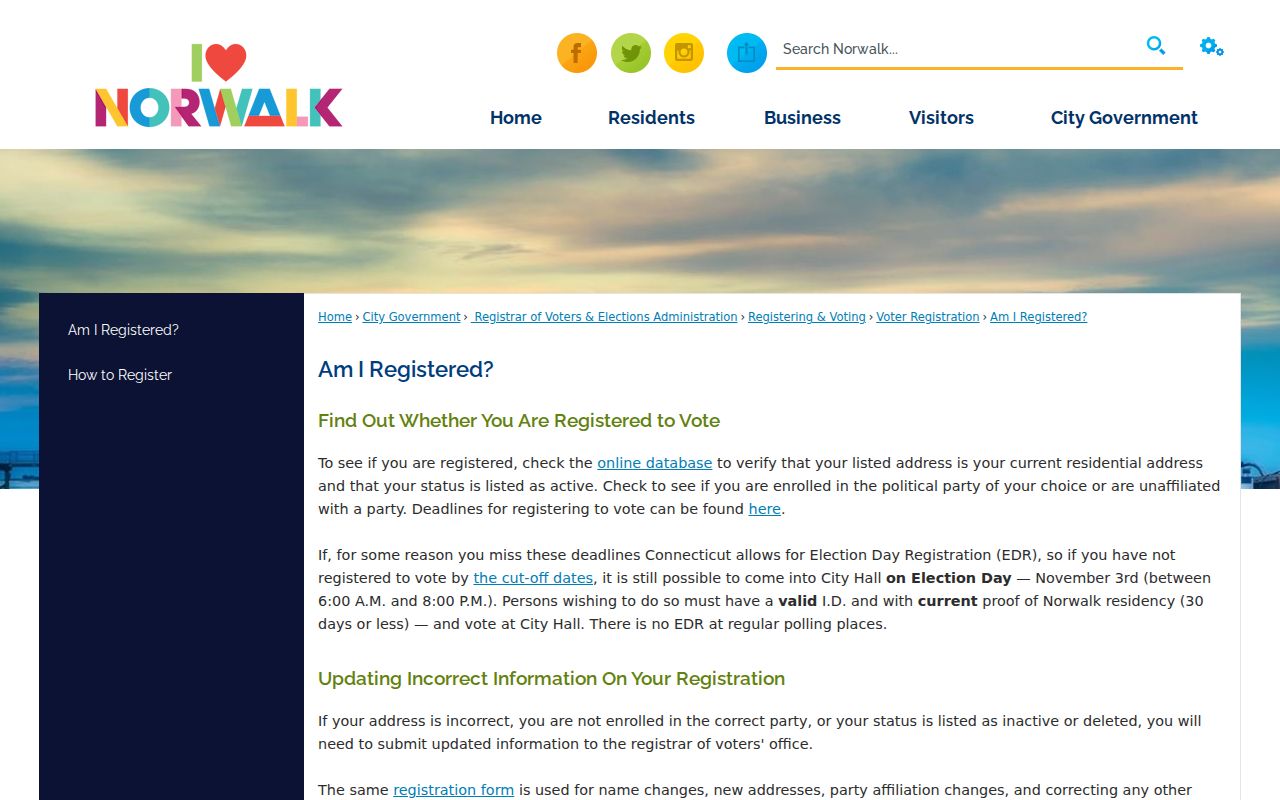
The Norwalk instructions are the local explanation of a narrower state lookup.
The state-linked surface is also captured in the manifest.
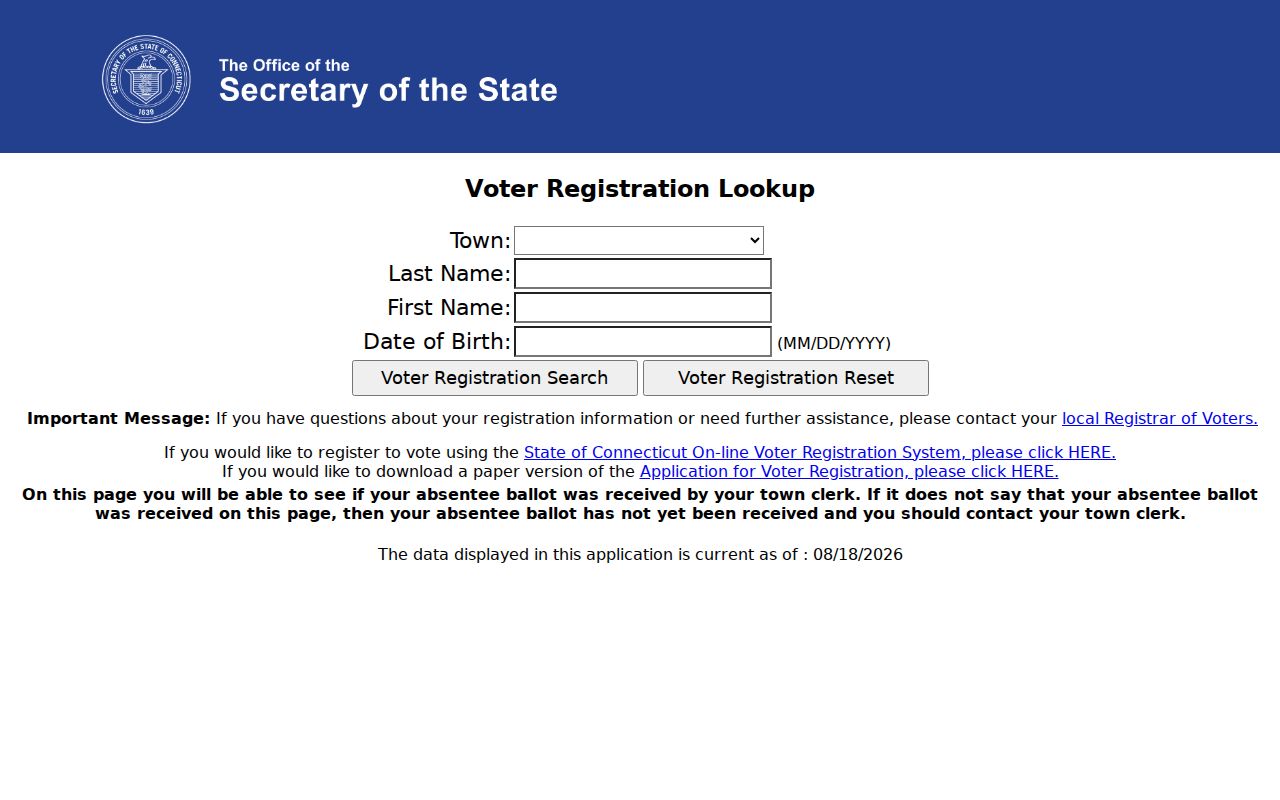
Neither a suppressed address nor a missing result should be reverse-engineered.
The Norwalk History Room Adds Time Depth
Current portals cannot replace the Norwalk Public Library History Room. The lower-level collection holds directories, yearbooks, newspapers, maps, photographs, manuscripts, local records, and finding aids reaching back to settlement in 1651. The Main Library is at 1 Belden Avenue, and the History Room lists black-and-white copies at 10 cents and color copies at 50 cents. Ask staff before retrieving closed-stack material, sign in, follow bag rules, and do not reshelve anything.
The city-directory run is broad, from 1871 through 1991 on the library page, with 1882-1960 on microfilm and later local or closed-stack holdings. The local guide notes gaps in 1920 and 1943-44. The Norwalk Hour index points to births, marriages, wedding notices, and obituaries, while the actual article may require microfilm or library computer access. The Gazette is digitized from May 6, 1818 through April 24, 1883.
These collections are dated publications, not current proof. Compare two directory years, preserve the printed locality, and move to a current parcel or Town Clerk source when a modern record is needed. The Norwalk historical city directory page carries the collection-by-collection method.
The Norwalk History Room collection page shows the institutional route behind the old resident rolls.
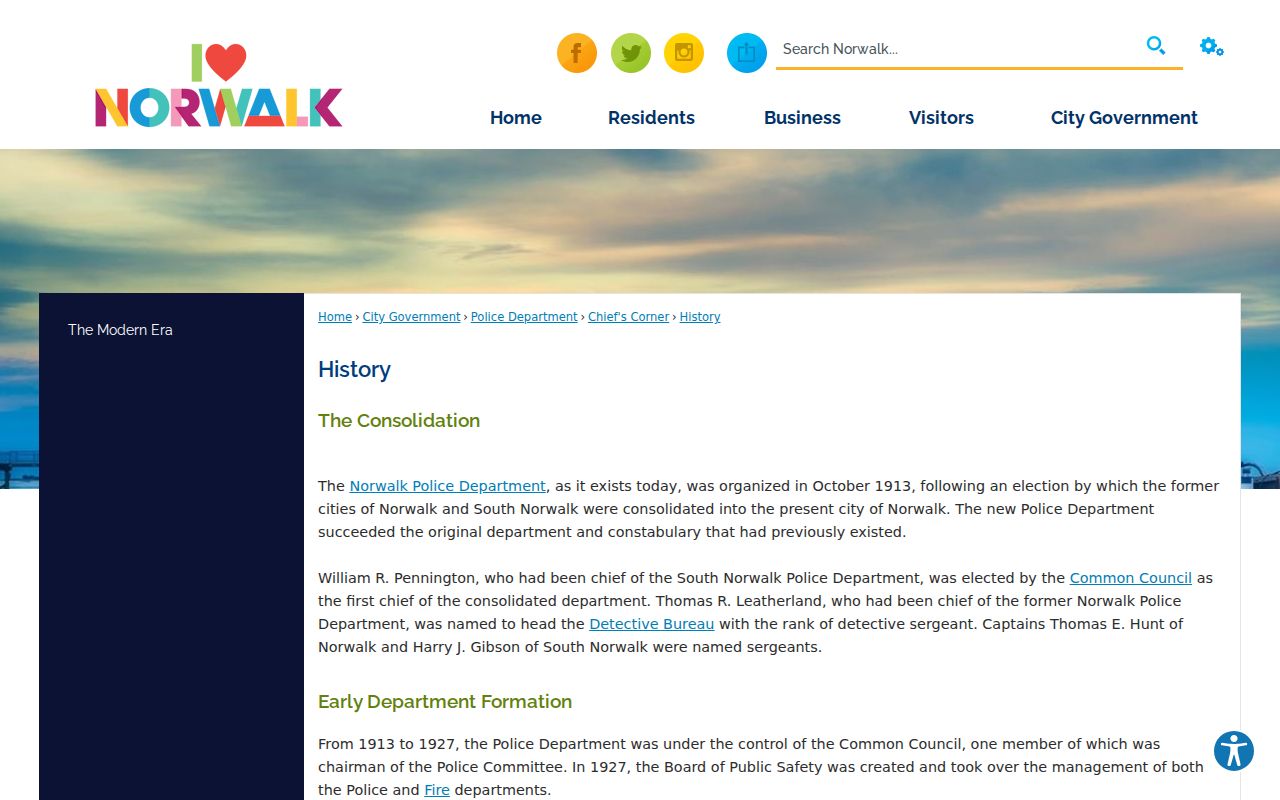
Staff help can bridge a surname, street grid, reel, volume, and municipal custodian without turning a finding aid into a final record.
Historical Norwalk Resident Records and Directories
A historical Norwalk resident directory can show a printed name, an address, an occupation field, a household mark, or a business listing for a dated edition. Norwalk holdings include local directories, reverse or criss-cross material, telephone directories, and regional backups. The year matters as much as the name because South Norwalk, East Norwalk, Rowayton, and old taxing-district labels may appear differently across the run.
For family history, compare consecutive years, note a move, then test the street against the official map, a parcel record, a deed reference, or a dated newspaper. The Norwalk street directory lookup guide explains how to connect an address to land, map, and permit records, while the directory collection guide covers the historical shelves and microfilm. A directory can start a trail, but it cannot prove that a person remained at that address after publication.
Norwalk ZIP Labels Are Not Neighborhoods
USPS lists Norwalk labels 06850 through 06858 in Postal Bulletin material. USPS delivery geography is not a parcel, neighborhood, taxing district, or school boundary. Census ZCTAs are statistical approximations that may differ from current delivery routes. A full address search should preserve the standardized address, ZIP, ZIP+4, recommended city, and search date rather than converting a ZIP into a resident or neighborhood claim.
06859 is historical after the 2017 bulletin moved the label to 06854. 06860 appears in postal reference material as a possible unique or Business Reply Mail label, but the current general-delivery coverage was not machine-verified. Use the current USPS lookup for the exact address. Then use My Norwalk, DataScout, or MapGeo if the actual question is about a parcel or district.
Norwalk’s ZIP records are useful for narrowing a search, not for naming who lives there. A ZIP can hold several localities, and a street can carry more than one address field over time. Keep postal, statistical, municipal, and historic geography in separate columns.
Build a Source-Linked Norwalk Person Trail
A careful resident lookup has a small evidence row for each source: name as displayed, role, address or parcel if public, date and date type, record identifier, source URL, access note, and next verification step. Require two independent identifiers before joining records, such as name plus address, name plus parcel and book/page, or name plus docket role and date. A business principal, trustee, licensee, grantor, and occupant are not interchangeable roles.
The distinction between official records and commercial people-search tools is practical. Official sources name a custodian and publish a scope or access notice. Commercial tools may combine old data from unclear sources, charge for more detail, or collapse people with similar names. Neither category should be treated as a final identity answer without a direct source.
| Trail type | Useful first source | What still needs checking |
|---|---|---|
| Property connection | DataScout card and Town Clerk index | Recorded deed, role, date, and current status |
| Historical household | Library directory or newspaper index | Article, image, street match, and publication date |
| Court or estate lead | Judicial inquiry or PD51 lookup | Clerk file, disposition, date, and protected content |
| Credential or entity | eLicense or Secretary of the State search | Credential role, status, filing, and address type |
- Roll
- A recurring record set, such as an assessment or voter register, with its own keeper and date.
- Index
- A finding aid that points to an instrument, article, docket, or image.
- Criss-cross directory
- A reverse directory organized by street or address rather than only by surname.
- Parcel
- A mapped unit used by assessment and GIS systems, not a complete legal description or proof of occupancy.
Norwalk’s Three Historic Civic Faces
Norwalk’s civic history supplies a useful time axis for records. The city’s seal and history materials connect a bridge with old Norwalk, the Old Well with South Norwalk, and the Roger Ludlow monument with East Norwalk. Those three terms help locate a dated directory, newspaper, map, or church reference before a modern address is known.
The 1913 consolidation joined the three civic areas. The 1955 flood later shaped redevelopment and also left a documented gap in some Norwalk Hour microfilm. A missing reel is therefore a source limitation, not evidence that no notice or event existed. The digitized Gazette, town reports, maps, directories, and State Library holdings can provide a second route.
Use the historic label exactly as printed, record the date, then test the present parcel and current custodian. That simple habit keeps a nineteenth-century locality from being mistaken for a current municipality.
When a Norwalk Resident Records Search Fails
A blocked or thin portal should change the access route, not the fact standard. For land, visit the Town Clerk or request the instrument by party, book/page, or parcel lead. For assessment, use the Assessor’s public terminals and tax maps. For GIS, request a PDF, CAD, Shapefile, or official copy through GIS@NorwalkCT.gov. For permits, use Building and Code Enforcement or DPW. For library material, give staff a surname, date range, street, and desired record type.
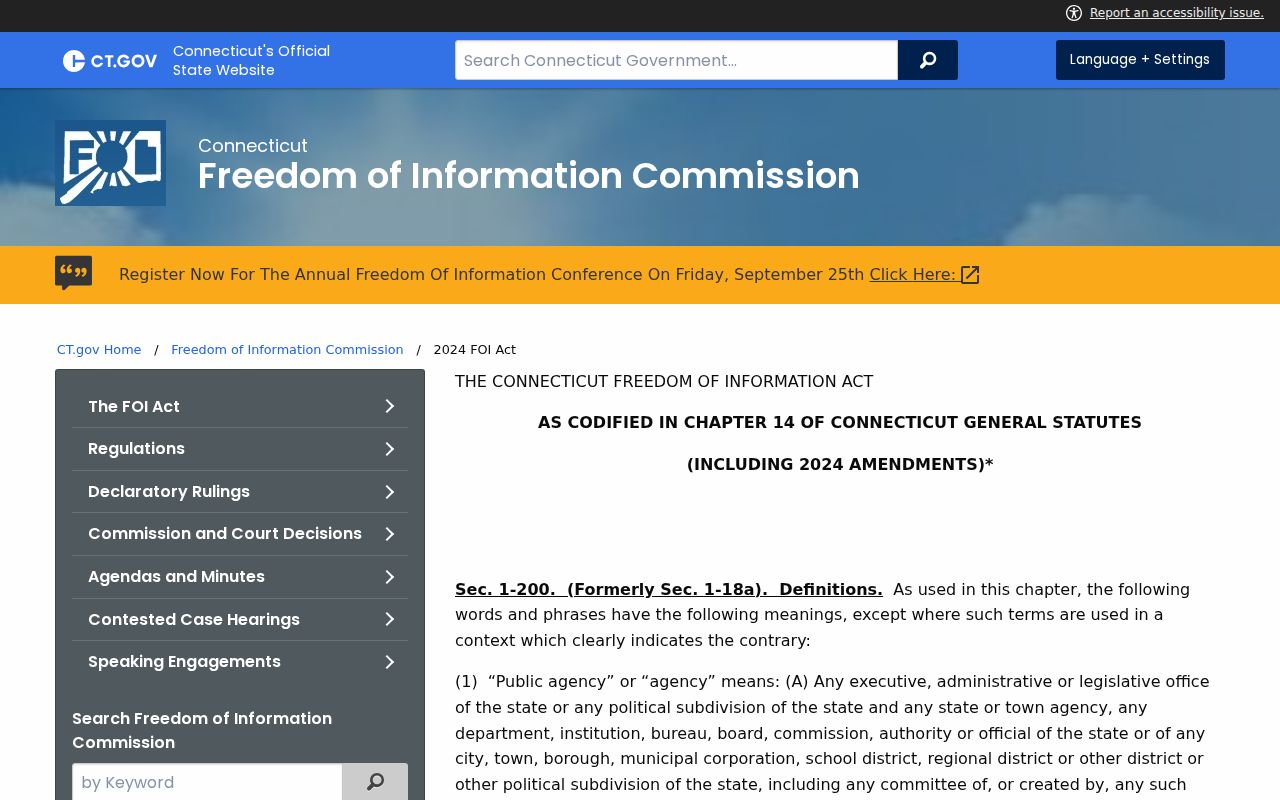
Connecticut’s FOI Act, CGS Sections 1-200 through 1-242, supports prompt written access to non-exempt public records. Norwalk’s request portal is at NextRequest, with email, mail, and in-person requests as fallbacks when the form is not usable. Court, vital, voter, ACP, and protected records still follow their own rules.
The official FOI source shows why a written request is a real access path rather than a last resort.
Keep the request narrow, state the record and date range, save the custodian’s response, and label a gap as not public, not machine-readable, or not searched.