
Norwalk Previous Residents Source Eras
No single Norwalk record names every person connected with an address. The useful trail moves from a current parcel and deed reference to dated directories, newspapers, probate, and older land indexes. These sources have different custodians and time windows.
| Source | Years It Covers | Where Held | What It Shows |
|---|---|---|---|
| Norwalk field card and parcel search | Current card; historic deed references | Assessor and ACT DataScout | PID, situs, owner line, transfer clue |
| Norwalk land records in FamilySearch | 1652-1915 | FamilySearch catalog; originals at Town Hall | Index and microfilm path to deeds |
| Norwalk city directories | 1871-1991; local guide through 1992 | Library History Room and regional holdings | Dated names, addresses, and household clues |
| Norwalk Gazette | May 6, 1818-April 24, 1883 | History Room digitized run | Names, notices, and local events |
| Norwalk Hour | 1895-2006 microfilm; index 2005-May 2016 | History Room and library index | Obituaries and event notices; flood gap |
| Norwalk-Wilton Probate District 51 | January 5, 2011-present; pre-2011 incomplete | Connecticut case lookup | Estate or trust case lead |
| Permits and certificates | Coverage start year not stated | Norwalk portal and Building and Code Enforcement | Permit, certificate, complaint, or violation trail |
Start with the era in question. Use a deed for recorded transfer, a directory for a dated address, a newspaper for a notice, and probate for an estate lead. A blank result needs a source note.
Norwalk Address to Parcel Starting Point
Preserve the original street text, then use the current Norwalk sequence: My Norwalk for property, school, voting, and council-district context; MapGeo for parcel location and layers; ACT DataScout for the PID, owner or mailing line, situs, tax map, and transfer clue; the Town Clerk for the recorded instrument; and permits, GIS, or the library for follow-up.
DataScout replaced the former Vision/VGSI route during the January 2026 transition. If an online form fails, the Assessor keeps public terminals, the Town Clerk allows land-record inspection during normal business hours, and GIS can provide official copies or data extracts through its request route. The sequence is a handoff, not proof that the first result is correct.
Keep separate fields for the original address, normalized address, direction, street type, unit, ZIP or ZIP+4, historic locality, date observed, and source URL. My Norwalk uses Street Number, Alt#, and Street Name; the permit portal splits PreDirection, Street Name, Street Type, and Unit. Preserve the source spelling before normalizing it.
Address flow: My Norwalk → MapGeo → ACT DataScout → Town Clerk → permits, GIS, or library history.
Norwalk Deed Chain for Past Residents
Norwalk land transactions are recorded by the Town Clerk, not by a current Fairfield County recorder. The Town Clerk index covers deeds, conveyances, mortgages, liens, judgments, maps, tax liens, and attachments. Connecticut CGS §7-25 calls for alphabetical grantor and grantee entries, cross-indexed names, the instrument type, receipt date, and book or page. The Norwalk land-record page and its public index are search aids; the recorded instrument is the evidence.
- Pull the current owner line, PID, situs, and any deed reference from the Assessor or DataScout.
- Search the Town Clerk index by the current grantee, with spelling and punctuation variants.
- Record the instrument, named parties, receipt date, execution or transfer date, book, and page.
- Search the seller as an earlier grantee, then repeat the chain backward one instrument at a time.
- Move older entries to deed books, microfilm, maps, or the library and archive route when the online index stops.
- Grantor
- The party shown as giving or conveying an interest in the instrument.
- Grantee
- The party shown as receiving that interest.
- Chain of title
- The linked sequence of recorded transfers for a parcel or legal interest.
- Legal description
- The lot, map, or boundary wording that identifies land more precisely than an old street label.
When a book or page does not connect cleanly, preserve the break and ask the Town Clerk or archive about the referenced map, corrective instrument, or older index.
Norwalk Book/Page Clues for Past Residents
A Norwalk field card example ties parcel 5-23-10-0 and PID 13598 to 238 West Rocks Rd. Its transfer line shows 9/30/1968, Book 705, Page 165, type N/A, and an estimated sale of $0. The card is current as of 1/20/2026 and marked “Not a Legal Document; subject to terms.” The $0 figure is not a sale price and does not show that no consideration changed hands.
Request Book 705, Page 165 from the Town Clerk and compare the grantor, grantee, legal description, and later releases or liens. Keep the 2026 assessment date separate from the 1968 deed reference. The Norwalk Library land-record resource provides the historical index route that complements the card.
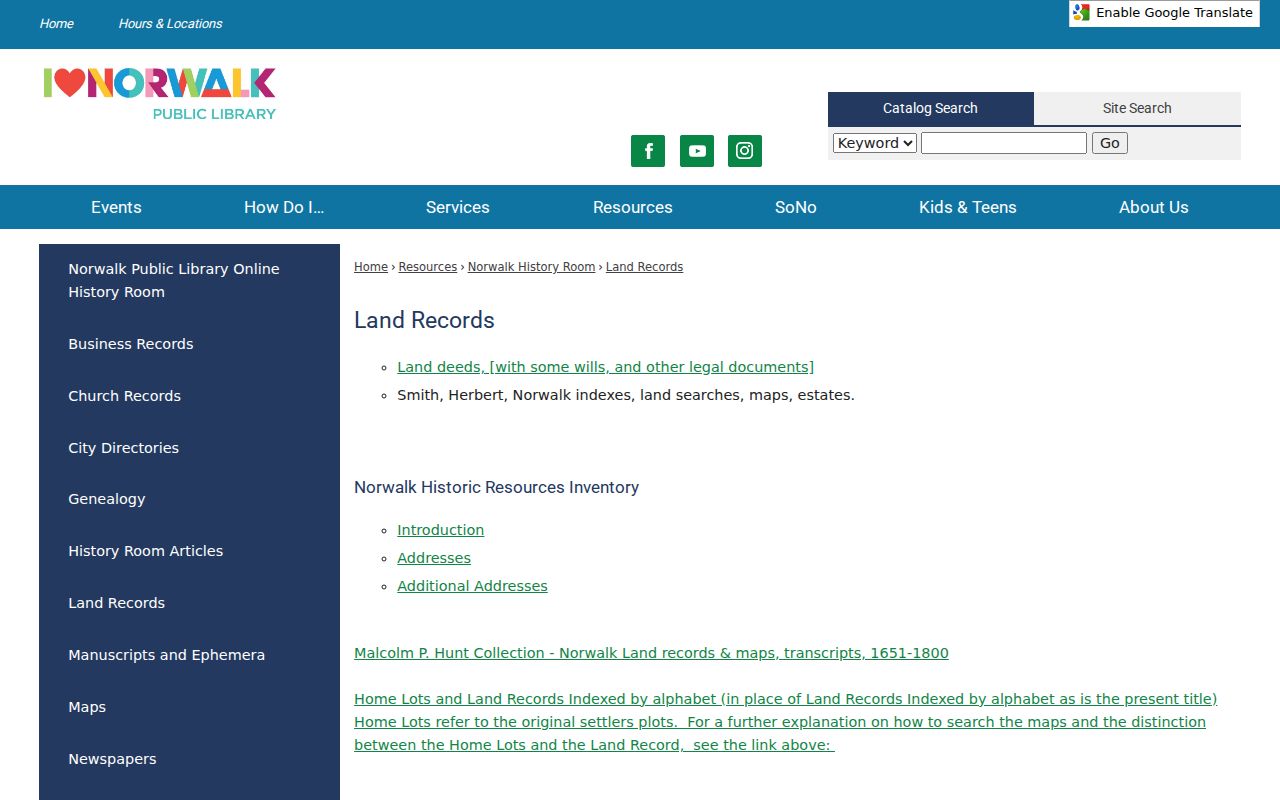
The land-record source helps turn a field-card clue into a dated request for the underlying instrument.
Norwalk Directory-Census Trail for Past Residents
Deeds show recorded title, not every household at an address. Norwalk city directories add dated names and street entries, with local gaps in 1920 and 1943-44 and later cross-reference material about 1980/81 forward. The collection shelves and year runs are kept in the Norwalk Directory Book, so the backward trail can use the right volume without treating it as a current roster.
- Choose an address, year, and historic locality label, then copy the directory wording exactly.
- Check the alphabetical name section and the street-order or criss-cross section when available.
- Pair the directory year with the nearest federal census year, keeping publication and enumeration dates distinct.
- Compare consecutive volumes for a move, new household, boarder, or missing listing.
- Test the result with a newspaper notice, obituary, vital aid, probate lead, or recorded instrument.
A directory entry may place a person at an address for a publication date; it does not prove a deed, continuous residence, or the exact day of a move.
Norwalk Newspaper Leads for Past Residents
The Hour index is a practical bridge when a directory stops at a name. It indexes births, marriages, wedding notices, and obituaries, but the article itself requires library microfilm or computer access. The Hour microfilm has missing reels and a 1955 flood gap, so a no-hit result may describe the collection rather than the person.
The digitized Norwalk Gazette covers May 6, 1818-April 24, 1883. NewsBank lists the Historical Norwalk Hour Weekly for 1874-1921 and the Daily for 1895-2009. Save the item date, page, index entry, and source status before using a notice to connect a past resident to an address.
The Connecticut State Library genealogy guide is a useful archive route when a Norwalk newspaper or directory points beyond the local shelf.
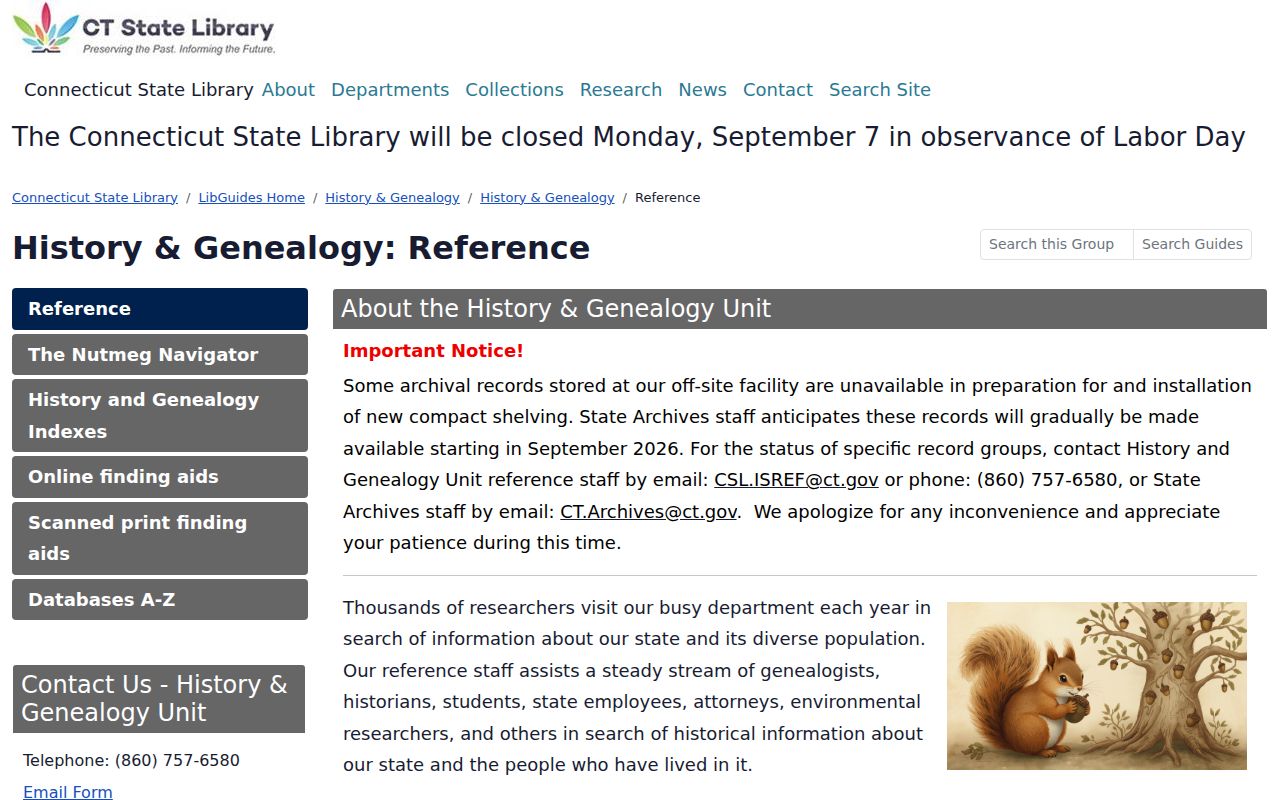
Its finding aids help separate a historical pointer from the original newspaper, map, or record that still needs review.
Norwalk Probate Clues for Past Residents
Probate can explain why a household or owner disappears, but an online case row is only a lead. In the Norwalk-Wilton Probate District 51 lookup, choose Decedent’s Estate or Trusts, select PD51, set Both, Open, or Closed, and enter a last or first name. Results show case number, names, middle initial, type, and district.
The listed case data runs from January 5, 2011 forward for those types, while pre-2011 material is incomplete. The result table may show no date or asset fields. Keep the case number and district, then ask the probate clerk, State Library, or archive for additional lawful access.
The Norwalk-Wilton Probate District 51 lookup shows the narrow result surface that should not be expanded into an unverified life history.
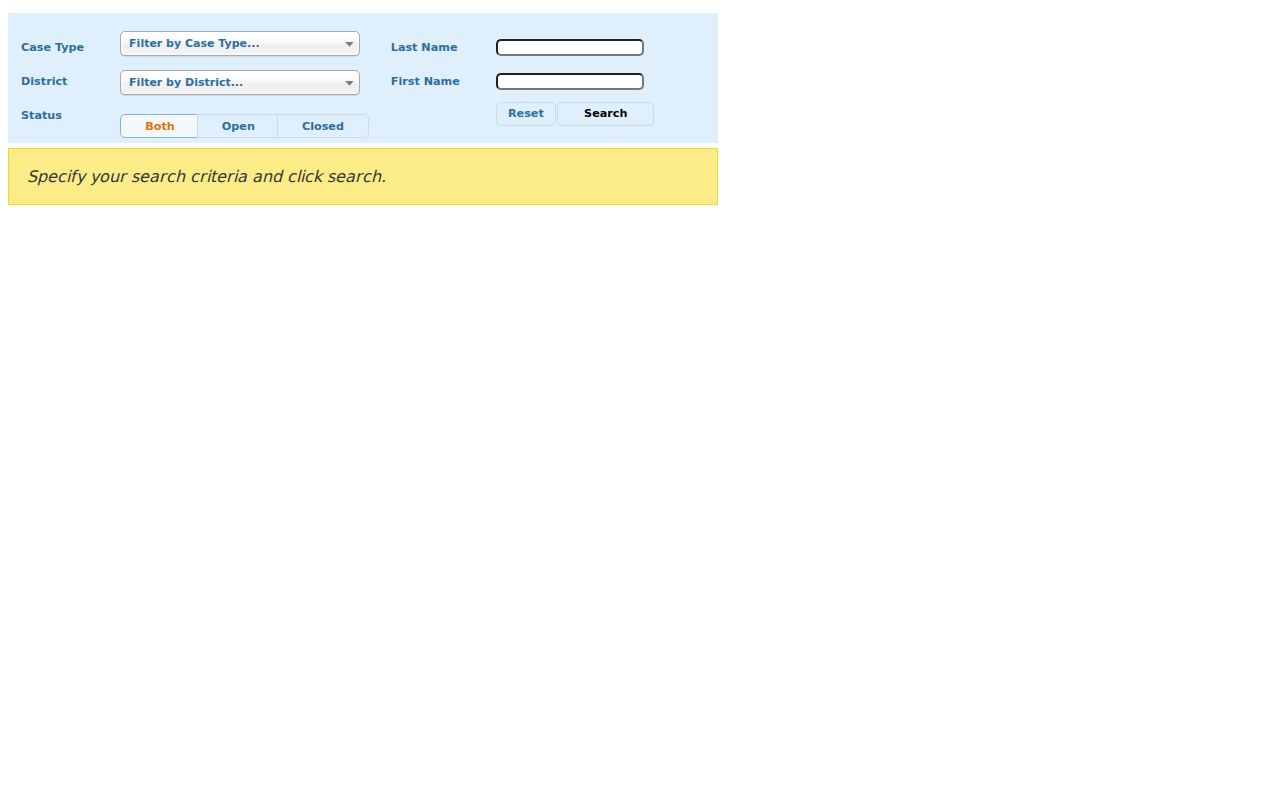
A case number can guide a follow-up request even when the public table omits dates or estate details.
Norwalk Historic Address Labels After 1913
Norwalk’s 1913 consolidation joined Norwalk, South Norwalk, and East Norwalk. A dated directory, deed, or newspaper may retain one of those civic labels. Rowayton and Five Mile River, plus Silvermine, Cranbury, West Norwalk, Wolfpit, Golden Hill, and Broad River, can also appear as historical or neighborhood terms.
Search the old label beside Norwalk, then compare the street, map grid, and record date. A locality word is not a legal description or a current municipality. The 1955 flood also matters because it changed the city’s physical story and left a gap in Hour microfilm coverage.
The Norwalk historical introduction provides the consolidation chronology used to read those older labels.
Norwalk Permit History for Past Residents
After a deed or directory lead, use the Norwalk permit/property portal for Street Number, PreDirection, Street Name, Street Type, Unit, Contractor, and APN fields. Its coverage start year was not stated in the inspection. Building and Code Enforcement at 125 East Avenue, Room 123, handles permits, certificates of occupancy, complaints, violations, unsafe buildings, demolitions, pools, signs, and tents.
The office lists 203-854-7755 and public hours Monday-Friday 8:30-4:00. Permit history, certificates, and open-work material can be requested through the department. Norwalk GIS adds parcel layers and aerials, with annual layer updates and aerial imagery every 5-7 years; the viewer is a convenience, not a survey. For older places, return to library maps, Herbert Smith, Malcolm P. Hunt, Home Lots, and the FamilySearch catalog.
Note: A permit, assessor card, map, or directory can add context without proving title, occupancy, or that every alteration was recorded.
Norwalk Previous Residents, Gaps, and Lawful Use
Mark the kind of gap you found: a directory year not published locally, an Hour reel missing after the 1955 flood, pre-2011 probate data not complete online, a vital record restricted by age or eligibility, or a historic street name not yet matched to a parcel. “Not found,” “not public,” “not machine-readable,” and “not searched” are different results.
Lawful use. Norwalk previous-resident research is suited to house history, family history, estate work, and personal curiosity. Keep the record trail narrow, and never use it to stalk, harass, or track a living person.
Keep only the detail needed for the stated question. Separate names, roles, dates, source grades, and suppression notices. A careful address history can show what the records support while leaving unsupported conclusions out.